|
History of Mineral Volunteer Fire Department
Founded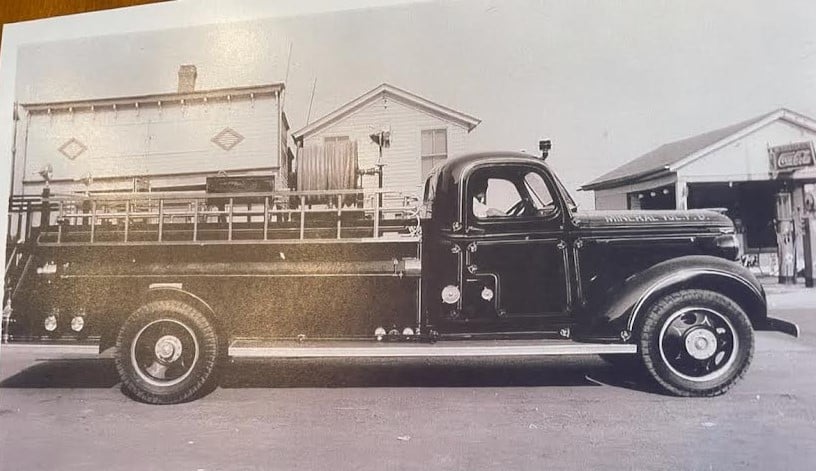 in June 1935, the Mineral Volunteer Fire Department holds a storied legacy as the second volunteer fire company in Louisa County. Among its charter members were community pillars such as C. I. "Shorty" Johnson, J. Walter Johnson, and D. Everette Bumpass, whose unwavering dedication and courage laid the foundation for the department's enduring service, inspiring generations to come. in June 1935, the Mineral Volunteer Fire Department holds a storied legacy as the second volunteer fire company in Louisa County. Among its charter members were community pillars such as C. I. "Shorty" Johnson, J. Walter Johnson, and D. Everette Bumpass, whose unwavering dedication and courage laid the foundation for the department's enduring service, inspiring generations to come.
Initially, the brigade relied on humble beginnings, starting as a bucket brigade before acquiring essential equipment like a hose cart and their first fire truck, a 1939 Chevrolet, in 1939. Remarkably, this historic apparatus is undergoing restoration today, a testament to the department's commitment to preserving its heritage, with descendants of the original members actively involved in the process.
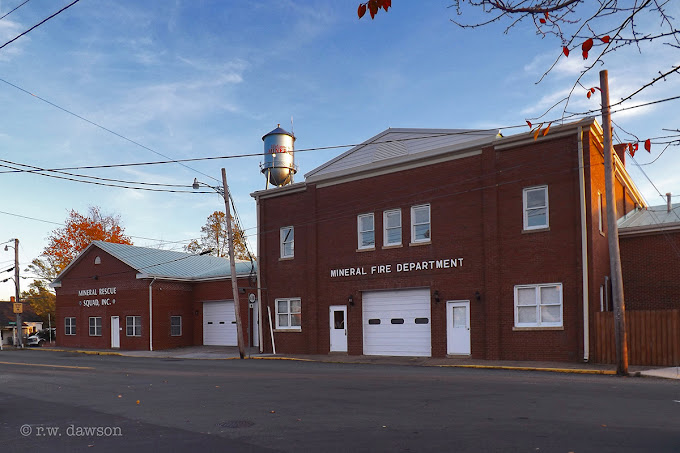
The department's evolution is marked by milestones, notably the construction of its first firehouse on April 1, 1949, and the subsequent growth of its facilities on East First Street, culminating in the modern station we see today. Throughout the decades, expansions, including one in the early 2000s, have accommodated the community's increasing demands.
Transitioning from an all-volunteer force to a full-time operation, the fire station now operates around the clock with dedicated career firefighters and emergency personnel, supplemented by the enduring commitment of volunteers. Responding to nearly 1,000 calls annually, the station is one of six equipped with career personnel, with additional volunteer-operated departments and rescue squads reinforcing the region's emergency response capabilities. This evolution is a testament to the department's resilience and adaptability, a source of pride for the community.
 The unwavering support of the Mineral Fire Auxiliary remains integral to the department's vitality. The Auxiliary continues to fuel the department's mission through annual events like the carnival, parade, and the renowned $10,000 Money Giveaway. Moreover, during crises such as large brush fires or power outages, the Auxiliary's assistance, whether providing sustenance or aiding administrative tasks, underscores their invaluable role in fortifying community resilience. The unwavering support of the Mineral Fire Auxiliary remains integral to the department's vitality. The Auxiliary continues to fuel the department's mission through annual events like the carnival, parade, and the renowned $10,000 Money Giveaway. Moreover, during crises such as large brush fires or power outages, the Auxiliary's assistance, whether providing sustenance or aiding administrative tasks, underscores their invaluable role in fortifying community resilience.
|

